Every generation has its beauty trends.
There was the era of ultra-thin eyebrows, dramatic tanning, oversized breast implants, duck lips, fox eyes, and more recently, filters and artificial intelligence that can transform a face with the swipe of a finger.
Now comes another phenomenon that has exploded across TikTok, Reddit, Instagram, and YouTube: Looksmaxxing.
As a plastic surgeon, I’ve had an increasing number of patients ask me about this trend. Is it simply another name for improving your appearance? In some ways, yes. But in many ways, no.
At its best, looksmaxxing promotes healthy habits that improve both appearance and overall well-being. At its worst, it encourages people—particularly young people—to obsess over perceived imperfections and pursue unsafe or scientifically unsupported methods in search of the “perfect” face.
What Is Looksmaxxing?
The term looksmaxxing simply means maximizing one’s physical attractiveness.
In principle, there’s nothing wrong with that. Most of us want to present the best version of ourselves. We exercise, eat well, care for our skin, dress appropriately, maintain good oral hygiene, and protect ourselves from the sun.
Those are all healthy forms of self-care.
The problem is that social media has transformed looksmaxxing into something much more extreme.
Online creators now analyze faces almost mathematically, discussing jaw angles, facial thirds, eye spacing, cheekbone projection, and the so-called “golden ratio.” The underlying message is often the same:
“You are almost attractive… but here are ten things you should fix.”
That mindset can quickly shift from healthy self-improvement to unhealthy self-criticism.
The Good Side of Looksmaxxing
To be fair, not everything associated with looksmaxxing is harmful.
Many recommendations are simply good medical advice:
- Exercise regularly.
- Maintain a healthy weight.
- Eat a nutritious diet.
- Sleep adequately.
- Wear sunscreen every day.
- Stop smoking.
- Limit alcohol.
- Develop a consistent skincare routine.
- Treat acne when necessary.
- Maintain healthy teeth and gums.
These habits improve not only appearance, but also confidence, health, and longevity. As physicians, we encourage them every day.
When Looksmaxxing Goes Too Far
Problems arise when appearance becomes an obsession rather than one aspect of overall well-being.
Social media algorithms reward extreme content. Influencers promise that one more supplement, one more cosmetic procedure, or one more “hack” will unlock the perfect face. Many of these individuals have no medical training, yet they present opinions as fact.
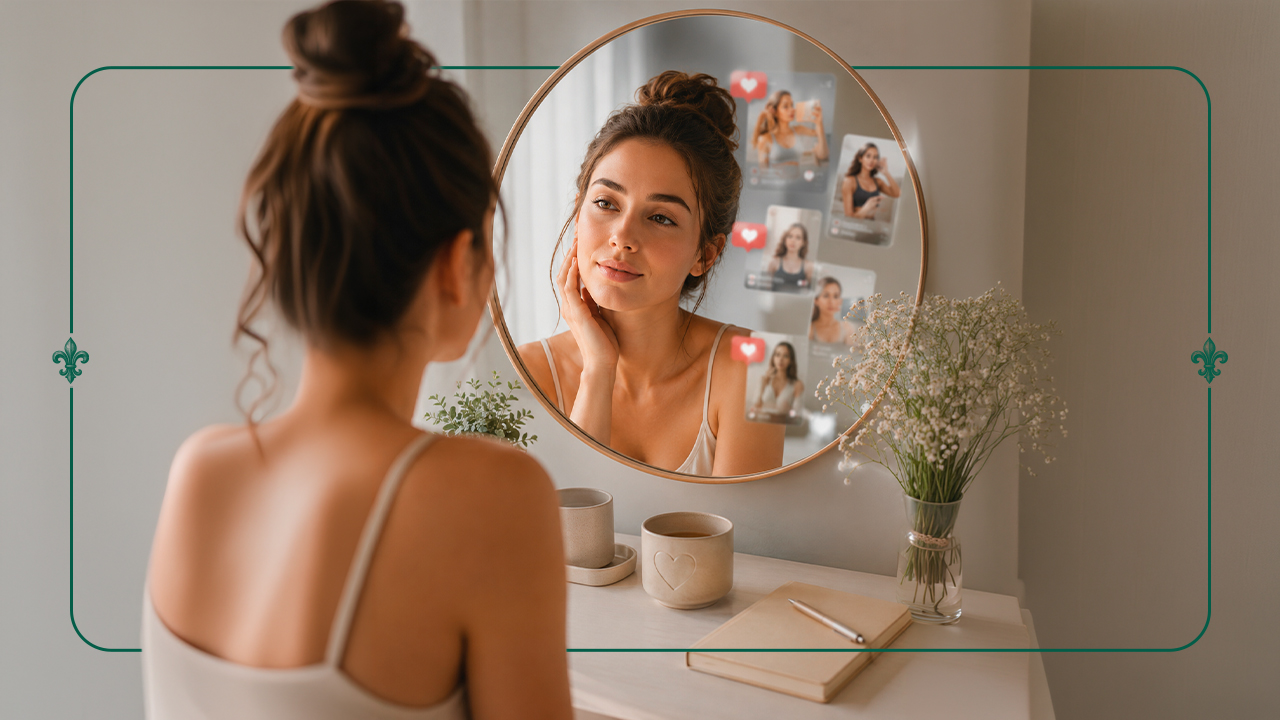
The result is that some people spend hours examining themselves in mirrors, comparing themselves to filtered images, or chasing an ideal that simply doesn’t exist.
Ironically, the more they try to improve, the more flaws they often discover.
This is especially concerning in teenagers, whose faces—and self-confidence—are still developing. No young person should feel that every facial feature needs to be optimized simply because social media says so.
And then comes the risk of developing Dysmorphic Body Disorder (BDD). BDD is a mental health condition in which a person becomes excessively preoccupied with one or more perceived flaws in their appearance that are either not noticeable or appear very minor to others. This preoccupation can cause significant emotional distress, interfere with daily life, and lead to repetitive behaviors such as frequent mirror checking, excessive grooming, comparing oneself to others, or repeatedly seeking cosmetic procedures. Importantly, cosmetic treatment alone rarely resolves the underlying distress, making psychological evaluation and treatment essential.
Popular Looksmaxxing Trends: What Does the Science Say?
Mewing
Mewing involves pressing the tongue against the roof of the mouth with the claim that it can reshape the jawline over time.
While proper tongue posture is important during childhood development, there is no convincing scientific evidence that mewing permanently changes the facial skeleton in healthy adults.
Bone Smashing
Perhaps the most alarming trend is bone smashing—repeatedly striking facial bones in the hope of stimulating bone growth.
This practice is dangerous and should never be attempted. It can result in fractures, nerve injury, facial asymmetry, chronic pain, infection, scarring, and permanent deformity.
Chewing and Jaw Exercises
Another popular trend encourages chewing extremely hard gum or using specialized jaw exercisers to create a stronger jawline.
While this may enlarge the chewing muscles slightly, it does not reshape the jawbone. Excessive jaw exercise may also contribute to teeth grinding, headaches, jaw pain, dental wear, and temporomandibular joint (TMJ) disorders.
Interestingly, in my own practice, I more commonly perform Botox® injections to reduce enlarged masseter muscles in patients seeking a softer, slimmer facial contour.
Extreme Weight Loss
Many looksmaxxing influencers encourage achieving extremely low body fat percentages to create a sharper jawline and more prominent cheekbones.
Maintaining a healthy weight certainly benefits both health and appearance. However, extreme weight loss often has the opposite effect on the face. Loss of facial fat can make people appear hollow, gaunt, tired, and prematurely aged, while severe dieting may also lead to nutritional deficiencies, muscle loss, hormonal changes, and other medical complications.
As with most things in medicine, moderation is usually the healthier path.
Can Plastic Surgery Help?
Unlike social media influencers, board-certified plastic surgeons don’t simply ask, “What feature should we change?”
We ask much more important questions:
- What bothers you?
- Why does it bother you?
- What result are you hoping to achieve?
- Are your expectations realistic?
- Will treatment genuinely improve your quality of life?
Sometimes surgery is the right answer.
Sometimes it isn’t.
Plastic surgery can improve confidence and help patients feel more comfortable in their own skin. What it cannot do is create happiness, repair relationships, guarantee success, or solve deeper emotional struggles.
Good aesthetic surgery should never be about chasing internet trends. It should be about achieving natural, balanced results that respect each person’s unique anatomy.
My Philosophy
Patients often ask me, “Doctor, what procedure do I need?”
My answer is usually, “Let’s first determine whether you need anything at all.”
One of the most important parts of my profession is knowing when not to recommend treatment.
Sometimes surgery is appropriate; mandibular V-line shaving, chin, cheek or jaw angle implants, buccal fat pad removal, deep plane facelift, etc. Sometimes a good skincare program, healthy lifestyle changes, laser treatments, orthodontics—or simply reassurance—is the better recommendation.
The most attractive faces are rarely the most mathematically perfect. They are the ones that look healthy, balanced, expressive, and natural. Small imperfections often give us individuality and character. Don’t forget that a genuinely smiling face is also highly attractive.
My goal has never been to make patients look like someone else. It is to help them become the best version of themselves.
Final Thoughts
There is nothing wrong with wanting to look your best. Taking care of your health, your skin, and your body is something to be celebrated.
The problem begins when self-improvement turns into self-criticism, or when social media convinces us that every facial feature needs to be optimized.
As plastic surgeons, our responsibility extends beyond performing procedures. It is to help patients distinguish evidence from internet hype, recommend treatments that are supported by science, and recognize when no treatment is needed at all.
Because true beauty has never been about perfection. It has always been about harmony, authenticity, and confidence—and those qualities will never go out of style.
Dr Marc DuPéré, Toronto Aesthetic Plastic Surgeon, Maison VISAGE