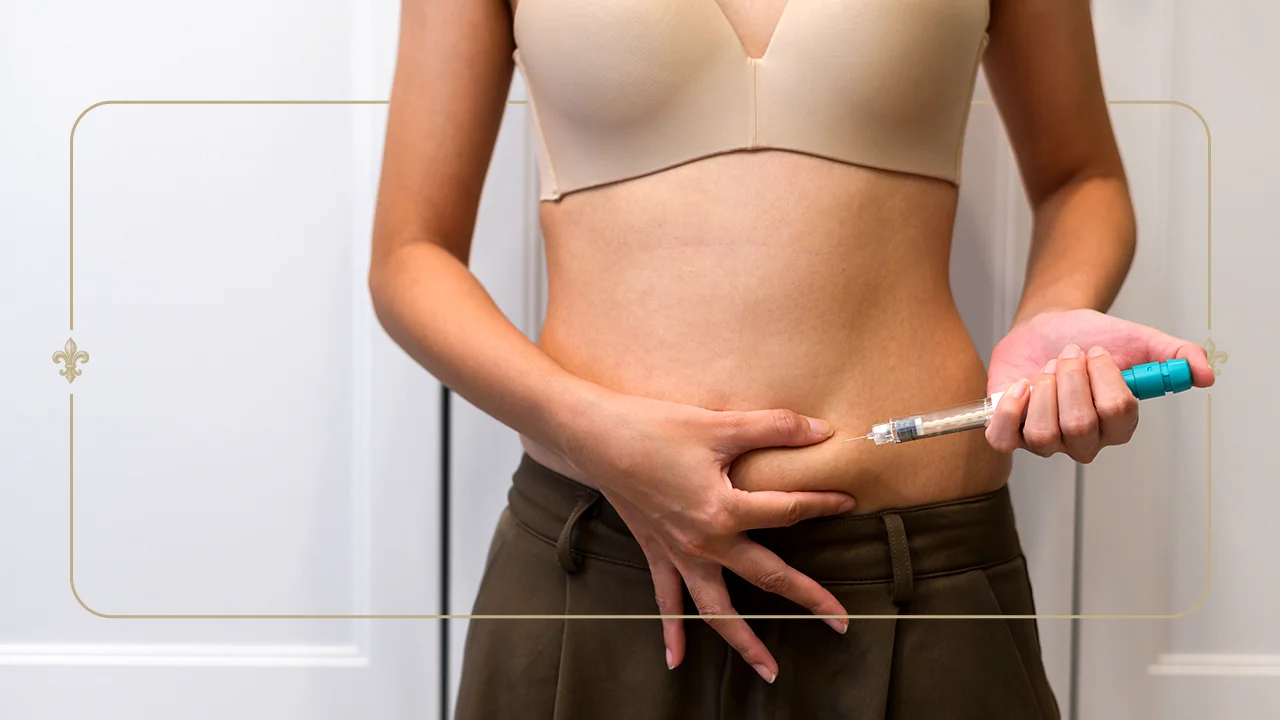
I will start first by mentioning that I am not an endocrinologist nor a weight loss physician, so what I am writing about here is based on my personal research and on my recent meeting in Rome for the World Lipedema Congress, where the GLP1-agonists were very prominently discussed as a new approach to patients with LIPEDEMA. Consequently, I have started discussing this modality with my patients in Toronto.
In the last few years, you may have heard a lot about medications like Ozempic®, Wegovy®, Mounjaro®, or Zepbound®. These drugs—often referred to as GLP-1 medications—have received a great deal of attention for their ability to support weight loss and improve metabolic health. Many patients with lipedema ask whether these medications might help them, and if so, how they fit into a comprehensive treatment plan.
As a plastic surgeon who treats patients with lipedema and obesity, I believe it is important to provide clear, honest, and realistic information. GLP-1 medications are not a cure for lipedema, but for some patients, they may be a valuable tool to improve overall health, reduce inflammation, and support long-term management of this complex condition.
What Are GLP-1 Medications?
GLP-1 stands for glucagon-like peptide-1. It is a hormone that your body naturally releases after you eat. This hormone helps regulate blood sugar, slows down how quickly food leaves the stomach, and sends signals to the brain that you are full.
GLP-1 medications are designed to mimic this natural hormone—but they last much longer in the body. Because of this, they help:
- Reduce appetite
- Decrease constant hunger or “food noise”
- Improve blood sugar control
- Support gradual, sustained weight loss
These medications were originally developed to treat type 2 diabetes. Over time, doctors began to see that many patients also experienced significant and lasting weight loss, even when dieting had not worked for them in the past.
What Benefits Are We Seeing With GLP-1 Medications?
1. Meaningful Weight Loss Without Extreme Dieting
Unlike traditional diets that rely on willpower alone, GLP-1 medications work by changing how your brain and body respond to food. Many patients describe feeling satisfied with smaller portions and thinking less about food throughout the day.
For people who have struggled with weight for years—especially those who have tried “everything” without success—this can be life-changing. Weight loss tends to be gradual and more sustainable than crash dieting.
2. Improved Metabolic Health
Many patients with lipedema also have insulin resistance, pre-diabetes, or metabolic syndrome—even if their weight is not extremely high. GLP-1 medications help the body use insulin more effectively, stabilize blood sugar, and lower inflammation throughout the body.
Improving metabolic health can lead to:
- Better energy levels
- Less fatigue
- Improved mobility
- Reduced long-term health risks
3. Reduced Inflammation
Lipedema is not just a problem of excess fat—it is a condition involving inflamed, painful, and abnormal fat tissue. While research is ongoing, GLP-1 medications are known to reduce inflammation in the body. Many patients report feeling less swollen, less achy, and less inflamed overall once their metabolic health improves.
4. Heart and Blood Vessel Protection, Liver and Memory
Large studies have shown that GLP-1 medications reduce the risk of heart attack and stroke, especially in patients with obesity or diabetes. This is an important benefit, as long-term metabolic stress increases cardiovascular risk over time. They were also recently shown to have some positive effects on liver fibrosis and on memory.
Why Lipedema Does Not Respond Like “Regular” Weight Gain
One of the most painful experiences for people with lipedema is being told that they simply need to lose weight. Many patients have followed strict diets and exercise programs with little change in the size or shape of their legs—and often with worsening frustration or shame.
This is because lipedema fat is different.
Lipedema fat:
- Is hormonally influenced
- Is resistant to traditional weight loss
- Is often painful and tender
- Can worsen despite healthy lifestyle habits
Weight loss alone usually does not eliminate lipedema fat. That is not a failure—it is a biological reality.
Understanding this distinction is essential for setting realistic expectations and compassionate treatment goals.
How GLP-1 Medications May Help Patients With Lipedema
1. Treating Co-Existing Obesity or Metabolic Issues
Many patients have both lipedema and excess non-lipedema fat, especially in the abdomen or upper body. GLP-1 medications can be very effective at reducing this type of fat, even if lipedema fat remains.
This can:
- Improve mobility
- Reduce strain on joints
- Make daily activities easier
- Improve overall health and quality of life
2. Supporting Safer Surgery and Recovery
For patients considering lipedema reduction surgery, overall health matters. Better blood sugar control and lower systemic inflammation can reduce surgical risk and improve healing.
In some cases, GLP-1 medications can help patients reach a more stable, healthier baseline before surgery—making procedures safer and recovery smoother.
3. Helping With Pain, Swelling, and Fatigue
While GLP-1 medications do not directly remove lipedema fat, many patients report improvements in:
- General inflammation
- Body pain
- Swelling
- Energy levels
These changes may not be dramatic for everyone, but for some patients, they are meaningful.
4. Supporting Long-Term Management
Lipedema is a chronic condition. There is no single treatment that works for everyone. Long-term care often includes a combination of:
- Medical management
- Compression therapy
- Movement and strength training
- Nutrition strategies
- Surgery when appropriate
GLP-1 medications may be one helpful part of this long-term plan.
What GLP-1 Medications Cannot Do
It is important to be honest and clear.
GLP-1 medications:
- Do not cure lipedema
- Do not selectively remove lipedema fat
- Do not replace lipedema surgery when surgery is needed
They are a tool—not a miracle.
These medications also are not right for everyone. Side effects, medical history, and cost must all be considered carefully with a qualified medical provider.
A More Compassionate, Science-Based Approach
For far too long, patients with lipedema have been blamed for a condition they did not cause. Today, we understand much more about the biology of fat, hormones, inflammation, and metabolism. This allows us to move away from judgment and toward individualized, science-based care.
GLP-1 medications are not the answer for every patient—but for some, they can be a powerful way to improve health, function, and quality of life when used thoughtfully and appropriately.
The future of lipedema care is not about one treatment. It is about understanding the whole patient—and using every appropriate tool to support long-term wellness.
Book a consultation with Dr. DuPéré.
By Dr Marc DuPéré